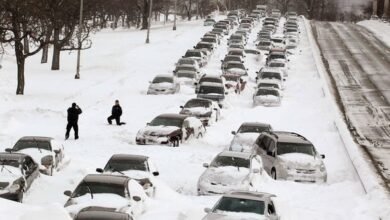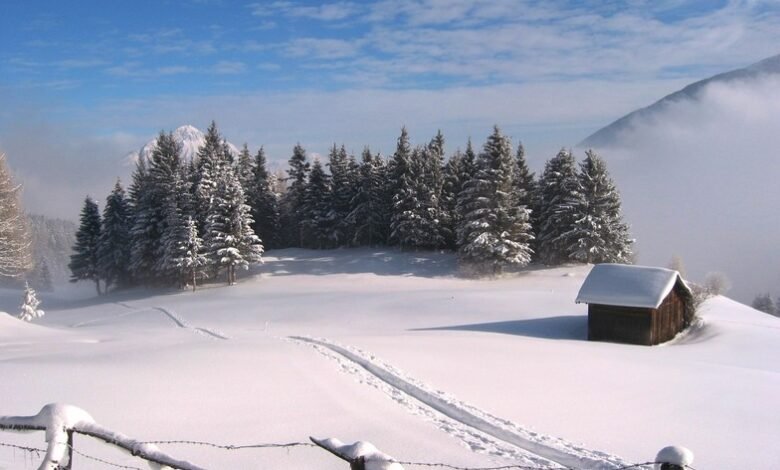
Winter is more than just a season; for those of us who live in the higher latitudes, it’s a high-stakes chess match against the atmosphere. We’ve all seen the dramatic “breaking news” banners and the frantic grocery store runs when a weather forecast snow storm alert pops up on our phones. But beneath the hype and the bread-and-milk memes lies a complex, fascinating science that dictates whether we get a light dusting or a paralyzing blizzard.
Weather Forecast Snow Storm .As a seasoned observer of the skies, I’ve learned that the secret to surviving—and even enjoying—a winter wallop is understanding what the meteorologists are actually telling us. The difference between a “Watch” and a “Warning” isn’t just semantics; it’s a directive for how you should live your life over the next 48 hours. In this guide, we’re going to peel back the curtain on how these storms form, how to read a forecast like a pro, and what you need to do to keep your household running when the world turns white.
Let’s be honest: there’s something oddly cozy about a snow storm, provided you aren’t the one stuck on a highway at 2:00 AM. By the time you finish this article, you’ll be the person in the group chat who actually knows if the “Model GFS” is being too aggressive or if that “Nor’easter” is really going to track out to sea. Knowledge is the best de-icer, so let’s dive into the frozen deep end.
The Anatomy of a Snow Storm: Why It’s Not Just “Cold Rain”
To the casual observer, snow is just frozen rain, but the meteorology behind it is far more selective. For a true snow storm to materialize, three distinct ingredients must converge in a perfect atmospheric handshake: moisture, lift, and freezing temperatures. Weather Forecast Snow Storm if even one of these is slightly out of alignment, you end up with a messy “slop-fest” of sleet or cold rain instead of the picturesque winter wonderland you were promised.
Moisture usually comes from a large body of water—think the Gulf of Mexico or the Atlantic Ocean. This humid air gets pushed into a cold air mass, which provides the “lift.” As that moist air rises, it cools, and water vapor begins to condense into ice crystals. However, the temperature profile of the entire atmosphere, from the clouds down to your driveway, must remain at or below 0°C (32°F). If there is a “warm nose” of air just a few thousand feet up, those snowflakes melt into rain, then potentially refreeze into ice pellets (sleet) as they hit the cold air near the ground.
This is why your local weather forecast snow storm can change so rapidly. A shift of just 50 miles in a storm’s track can mean the difference between 12 inches of powder and a torrential downpour. Meteorologists look for “omega blocks” and “troughs” in the jet stream to see where these air masses will collide. It’s a delicate balance of fluid dynamics that makes winter forecasting one of the toughest jobs in the world.
The Lingo: Watches, Warnings, and Advisories
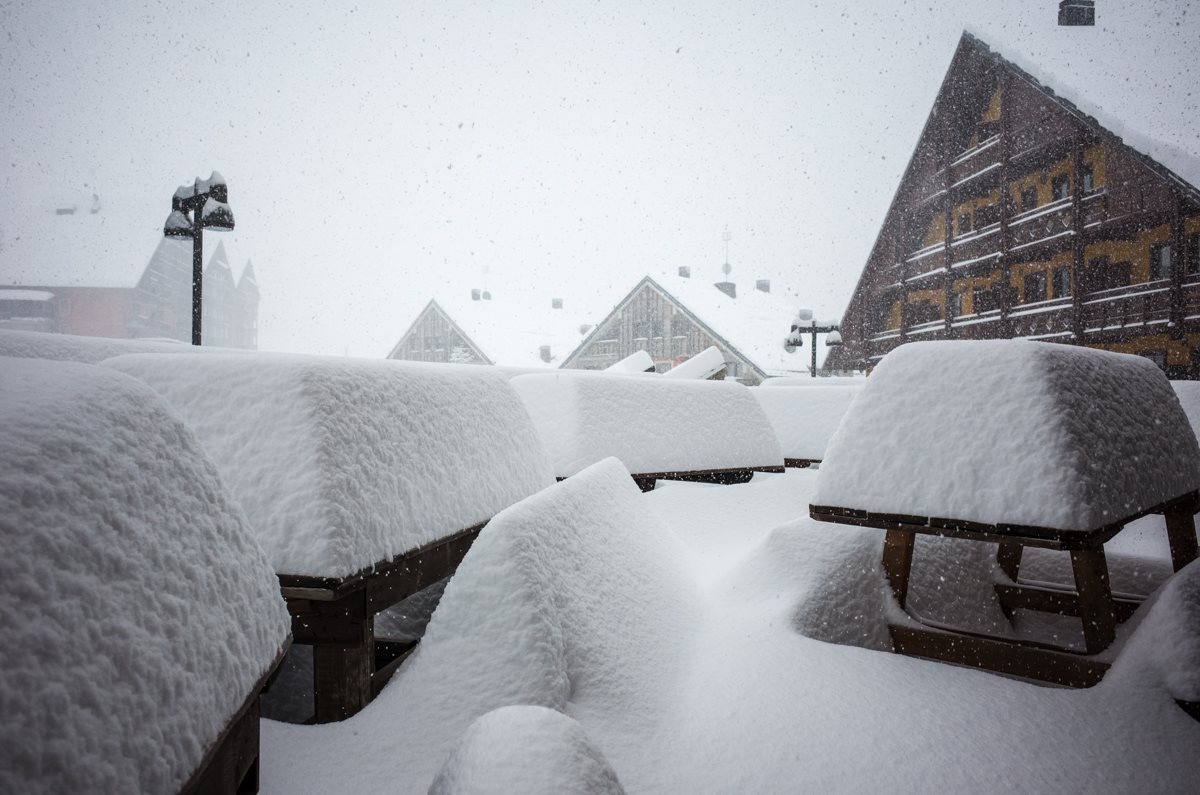
When you see a banner scrolling across your screen, Weather Forecast Snow Storm ,the terminology used is standardized for a reason. A Winter Storm Watch is the atmosphere’s way of saying, “Hey, heads up—the ingredients for a big event are in the kitchen, but the chef hasn’t started cooking yet.” Usually issued 36 to 48 hours in advance, a watch means you should check your supplies, but you don’t necessarily need to cancel your plans quite yet. It’s the yellow light of weather forecasting.
The Winter Storm Warning, on the other hand, is the red light. This is issued when “heavy” snow (usually 6 inches or more in 12 hours) is imminent or already occurring. When you see a warning, the “expert” move is to finish your errands immediately and get home. This is the stage where travel becomes dangerous, and the risk of power outages increases. If the warning is upgraded to a Blizzard Warning, you’re looking at the varsity level of winter weather: sustained winds of 35 mph and visibility reduced to less than a quarter-mile for at least three hours.
Finally, there’s the Winter Weather Advisory. People often ignore these, but that’s a mistake. Advisories are issued for “nuisance” weather—maybe 2 to 4 inches of snow or a light glaze of ice. While it might not bury your house, an advisory often covers the most dangerous driving conditions because the roads are just slick enough to be treacherous without looking “scary.” Treating an advisory with the same respect as a warning is what keeps you out of a ditch.
The Tech Behind the Forecast: From Satellites to Supercomputers
Modern weather forecasting is a marvel of human engineering. We no longer rely on a guy with a barometer and a good gut feeling. Instead, we use a global network of satellites like the GOES-16, which provides high-resolution imagery of cloud structures every 30 seconds. This allows meteorologists to see “cyclogenesis”—the birth of a storm—in real-time. But the real magic happens in the supercomputers running complex mathematical models.
You’ve likely heard of the “European Model” (ECMWF) and the “American Model” (GFS). These are essentially massive simulations that divide the atmosphere into a 3D grid and solve physics equations to predict how air will move. Weather Forecast Snow Storm .As we move through 2026, these models have become even more precise, utilizing machine learning to correct for past biases. An expert forecaster doesn’t just look at one model; they look at an “ensemble”—a collection of 20 to 50 different runs of the same model with slight variations. If 90% of the ensemble members show a heavy snow track, the confidence in that weather forecast snow storm sky-rockets.
However, even with the best tech, “mesoscale” features—small-scale bands of heavy snow—are notoriously hard to pin down. You might be in a “dry slot” where it barely snows, while your cousin ten miles away is getting two inches an hour. This is due to localized “banding,” where intense upward motion creates a narrow river of heavy snow. This is why we always provide a range (e.g., 4–8 inches) rather than a single number. If a forecaster tells you exactly 6.2 inches is coming, they’re either a time traveler or overconfident.
Preparing Your “Home Base”: Beyond the Bread and Milk
When a significant snow storm is in the forecast, the goal is self-sufficiency. If the power goes out, your house becomes a fancy tent very quickly. Expert preparation starts with the “Big Three”: heat, water, and light. If you have a fireplace or wood stove, ensure your wood is dry and accessible. If you rely on a furnace, make sure your vents aren’t blocked by drifting snow, as this can lead to deadly carbon monoxide buildup.
Food prep should focus on “no-cook” items. If the electricity is out, you don’t want to be opening the fridge every five minutes to see what’s for dinner. Weather Forecast Snow Storm think protein bars, canned tuna, peanut butter, and dried fruits. And don’t forget your pets! They need extra calories to stay warm in the cold, and you’ll want to have a clear path for them to do their business outside. Pro tip: fill your bathtub with water before the storm hits; it can be used to manually flush toilets if your well pump loses power.
Safety outside the home is just as critical. Shoveling snow is one of the leading causes of winter-related heart attacks. The combination of cold air (which constricts blood vessels) and the intense physical exertion of lifting heavy, wet snow is a dangerous cocktail. If you must shovel, take frequent breaks, drink plenty of water, and push the snow rather than lifting it. Better yet, if you can afford a snowblower or a local kid with a plow, this is the time to outsource the labor.
Survival on the Road: If You Absolutely Must Go Out
The best advice for a snow storm is to stay off the roads. Full stop. However, life happens—medical emergencies or essential work can force you into the elements. If you find yourself behind the wheel, your driving style needs to shift. Speed is your enemy; momentum is your friend. When climbing a hill, keep a steady pace—if you stop or spin your tires, you lose the friction you need to reach the top. Increase your following distance to at least three times the normal length to account for “black ice,” which is a thin, transparent layer of ice that looks like a harmless wet patch.
Your car should be a secondary survival pod. An expert “Winter Car Kit” includes more than just a scraper. You should have a heavy blanket or sleeping bag, a bag of sand or kitty litter (for traction), a small shovel, and a portable power bank for your phone. If you do get stuck or slide off the road, stay with your vehicle. It is much easier for rescuers to find a car than a person walking in a whiteout. Run the engine for only 10 minutes every hour to keep the cabin warm, and ensure the exhaust pipe is clear of snow to prevent fumes from entering the car.
Finally, keep an eye on your fuel tank. Weather Forecast Snow Storm during the winter, you should never let your gas drop below half a tank. This prevents the fuel lines from freezing and ensures you have enough gas to keep the heater running if you get stuck in a “gridlock” situation where the highway becomes a parking lot. It’s all about building in a margin of safety so that a “forecasted storm” remains an inconvenience rather than a tragedy.