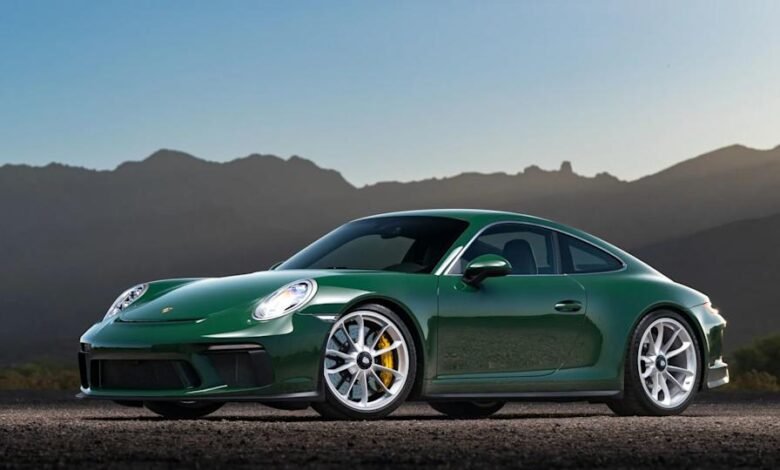
Few colors have a backstory as rich, classy, and downright iconic as British Racing Green. It’s more than a paint shade—it’s a heritage symbol, a motorsport signature, and a design language all by itself. Whether you’re a car lover, a design geek, or someone who just appreciates colors with character, British Racing Green (often shortened to BRG) is a hue worth knowing. It’s deep, it’s elegant, and it carries over a century of history on its glossy shoulders.
In this article, we’ll dive into what makes British Racing Green so legendary, how it started, why it endured, and why it still has such an irresistible charm today. Grab a cup of tea—this is a fun one.
What Exactly Is British Racing Green?
British Racing Green is one of those colors you can recognize instantly, even if you’re not entirely sure how to describe it. It’s a deep, lush green—somewhere between forest green and emerald—with a slightly moody tone that gives it character. Designers love it because it balances luxury with subtlety. Automotive fans love it because its roots are tied to the earliest days of international competition. And even outside motorsport, the color brings a sense of classic British sophistication.
What’s interesting about BRG is that there’s no single official shade. Modern paint codes vary from brand to brand—Jaguar has its own version, Mini has another, and Bentley has several. Historically, the shade shifted depending on the decade and the team using it. Some versions were almost black; others were brighter, with noticeable yellow undertones. This flexibility is part of its charm, allowing the color to evolve over time without losing its soul.
In design and branding, British Racing Green has become a statement color. It conveys tradition without feeling outdated, and luxury without feeling flashy. That’s a difficult balance to strike, but BRG nails it. It’s the kind of shade you see on a sports car, a luxury pen, a handcrafted leather wallet, or even a boutique storefront—and it always feels like the right choice.
The History Behind the Color: How BRG Was Born

The origins of British Racing Green are surprisingly sentimental. It all started in the early 1900s with the Gordon Bennett Cup, one of the first international car races. Each country was assigned a specific color, but Britain had a problem: racing in the United Kingdom was restricted at the time. So when it was Britain’s turn to host, the event had to be held in Ireland. As a nod of respect, British teams chose green—the national color of Ireland—and the tradition stuck permanently.
From that moment on, green became the racing color of Britain, and racing teams embraced it wholeheartedly. Early cars weren’t the shiny, polished machines we see in museums today. They were raw, loud, and often experimental—but British Racing Green made them look downright noble. The color became a badge of honor for drivers who were pushing boundaries and representing their nation on an international stage.
Over the next several decades, BRG showed up again and again in motorsport history. Bentley used it to dominate Le Mans in the 1920s. Jaguar brought it roaring into the 1950s with the C-Type and D-Type, two cars that reshaped racing engineering. Later, Formula One legends like Lotus, Cooper, and BRM kept the color alive. It wasn’t just paint—it was identity.
Even when motorsport rules changed and national colors were no longer mandatory, British teams kept BRG because it had already become inseparable from their heritage. You can think of it like a tradition that lasted long enough to become a brand.
British Racing Green in Automotive Design Today
Despite being over a century old, British Racing Green hasn’t faded away—it’s still one of the most beloved automotive colors in the world. Luxury brands use it because it instantly elevates the vehicle’s presence. Sports car brands use it because it carries the spirit of speed and competition. And collectors love it because it’s timeless.
Jaguar is one of the most famous ambassadors of BRG. Models like the F-Type, XJ, and the classic E-Type all look stunning in deep green. It’s also a favorite for limited editions and heritage models. The shade seems to highlight the curves and sharp lines of the body in a way brighter colors can’t.
Mini also proudly carries the tradition. Although their version is slightly lighter and more playful, it still pays tribute to the brand’s racing legacy. Meanwhile, Bentley treats BRG like a piece of jewelry—rich, glossy, and dripping with aristocratic confidence.
Even in Formula One, where liveries now focus on sponsors and aerodynamics, you’ll still find British Racing Green influencing designs. Aston Martin’s team, for example, proudly reintroduced a modern BRG shade, proving how resilient the color truly is.
What makes BRG so adaptable is its range. Darker versions look mysterious and powerful. Lighter versions feel sporty and youthful. Metallic finishes add shimmer; matte finishes make it bold and understated. The color keeps reinventing itself while keeping its core identity intact.
Why British Racing Green Stands Out in Modern Aesthetics
Beyond cars, British Racing Green has carved out a place in modern design culture. It has become a staple in luxury branding, fashion, interior design, and even tech accessories. It’s classy without being loud, and bold without being over the top.
Interior designers love it for accents—cabinetry, feature walls, upholstery, and statement furniture pieces. The color pairs beautifully with brass, cream tones, walnut wood, and soft lighting. It creates an atmosphere that feels both grounded and sophisticated.
In branding, BRG has come to represent quality and tradition. You’ll see it in packaging for heritage fashion brands, craft goods, and lifestyle products that want to communicate timeless craftsmanship. It’s not flashy, and that’s exactly why it works.
The psychology of the color also plays a role. Green represents stability, renewal, and confidence. The deep tone adds seriousness and maturity. When combined, the shade signals reliability—and maybe a touch of mystery.
In tech, the shade has made appearances on limited-edition gadgets, lifestyle electronics, and premium accessories. Green has been trending in user interface palettes as well, and BRG-inspired shades fit right into the movement.
The Enduring Appeal of a Timeless Color
British Racing Green has lasted more than a century not just because it looks great, but because it means something. It represents history, innovation, competition, elegance, and identity. It’s rare for a color to be so deeply tied to emotion, heritage, and performance all at once.
More importantly, BRG has aged gracefully. Unlike some vintage colors that feel stuck in the past, British Racing Green feels as fresh today as it did decades ago. It’s a chameleon: classic on a vintage Bentley, fierce on a modern supercar, warm inside a study room, and bold on a designer jacket.
It’s the kind of color that doesn’t need to scream for attention—its confidence does all the work. And that’s probably why it will continue to be a favorite for generations to come.